
Hard water, taste and scale: softeners, filters and reverse osmosis in Florence
Scale on faucets, spotted glassware and a water heater that works too hard are common signs of hard water. Taste and smell are a separate question. Call (520) 340-7175 and dispatch can book a plumber to test the water and talk through what fits.
Plumbers who install and service these systems are licensed and insured, and they start with what your water actually needs.
- Licensed and insured plumbers
- Same-day service when available
- 24/7 emergency dispatch
Hard water signs, and why testing comes first
- White crust on faucets and shower heads
- Spots on glasses and dishes
- Soap that will not lather well
- Dry skin or stiff laundry after washing
- Scale in the water heater or the kettle
Hardness numbers are missing from the latest water quality reports of both Florence's Town utility and Arizona Water Company. Arizona Water Company's report for the Pinal Valley system, which includes Coolidge, lists sodium but not hardness. A test of your own tap is the only way to know your level.
Softener, conditioner or filter: what each does
| System | What it does | Best when |
|---|---|---|
| Salt-based softener | Removes hardness minerals by ion exchange | Scale is the main problem |
| Conditioner without salt | Changes how minerals form scale | You want less scale and no salt |
| Whole-house filter | Removes sediment or chlorine for the whole house | Taste, odor or sediment is the issue |
| Reverse osmosis | Pushes water through a fine membrane at one tap | You want drinking water polished at the sink |
| Under-sink filter | Filters water at one tap | A simple taste fix at the sink |
Scale also builds up inside tank and tankless heaters, which is a common reason for calls covered on the repairing a failing heater and on-demand water heater pages, and it clogs aerators, which the fixture replacement page touches on.
Water treatment and conditioning is a menu of tools. Matching the tool to the test result avoids buying a system that does not address the problem.
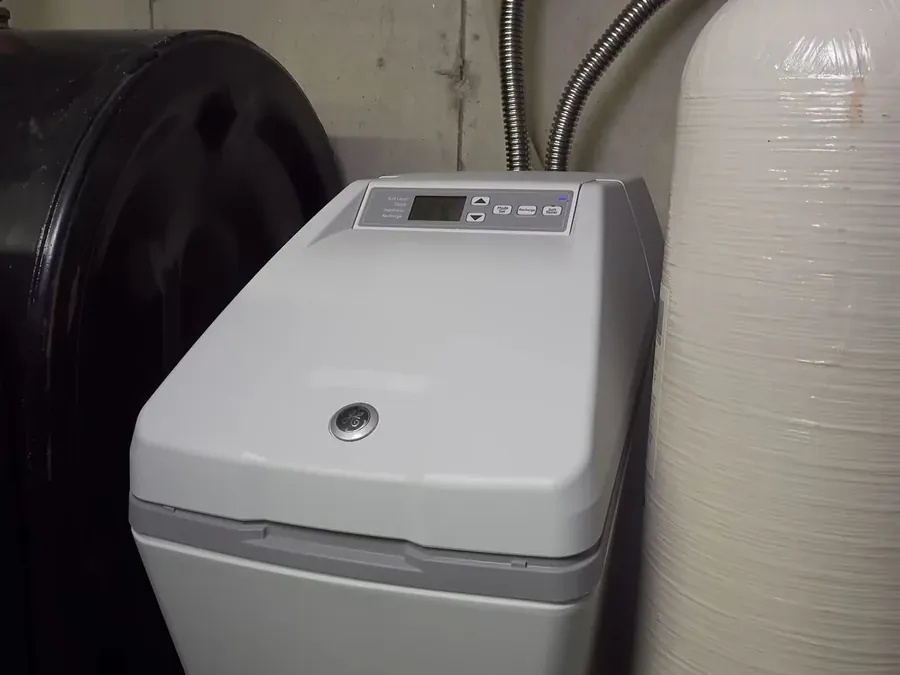
Water softener installation
- The plumber picks a spot with room for the tank, a drain and a power outlet.
- The water is shut off and the softener is tied into the main line with a bypass.
- A drain line is run for the regeneration discharge.
- The unit is set for the water's hardness and the household's use.
- Salt is loaded and the first regeneration is run.
Size matters. A unit too small regenerates constantly and wears faster, and one too large wastes salt and water. The plumber matches capacity to the hardness reading and the number of people in the house.
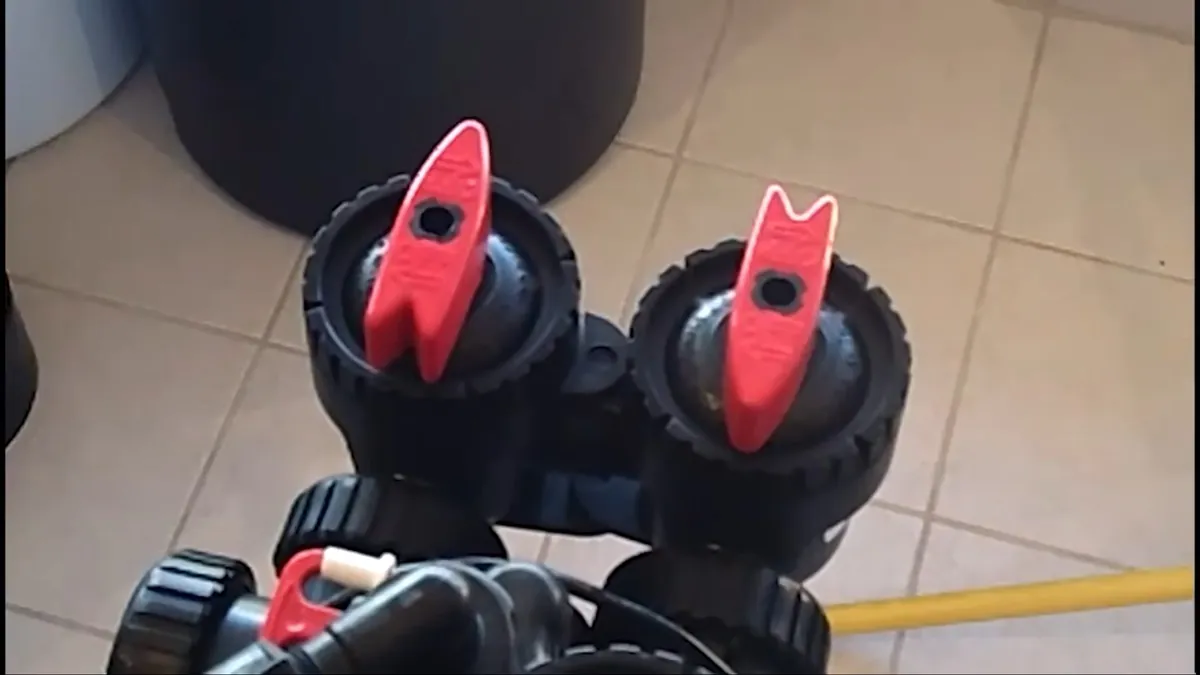
A bypass valve lets water flow around the softener for service or if the unit needs to be shut down. Ask where it is and how to use it.
Softener repair and service
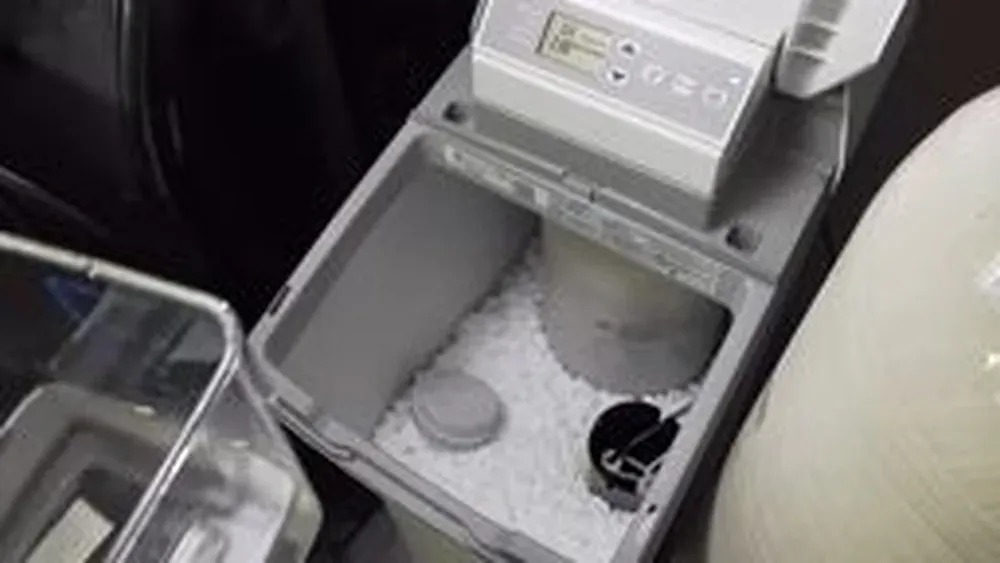
Softeners fail in a few common ways. A salt bridge, a crust that forms over the salt and stops brine from forming, leaves the unit unable to soften. A stuck valve, a clogged injector or a power fault can stop regeneration.
- Hard water returns even though the tank has salt
- The control head shows an error or does not cycle
- Brine is not drawn from the tank
- The drain runs constantly
- Salt use jumps or the tank overflows
After a lightning strike or a power surge, the plumber looks at the controller and its power supply before judging the tank or the resin.
The plumber checks the salt, the brine well, the valve and the settings. Regeneration, the process that flushes minerals out with brine, is the step where most faults show up.
Reverse osmosis drinking water
A reverse osmosis system sits under a sink and sends water through a fine membrane. It has its own faucet for drinking and cooking. Filters and the membrane need changing on a schedule, and the system wastes some water as it works.
Under-sink and whole-house filters
Under-sink filters
A simple cartridge filter improves taste at one tap. It is quick to install and quick to change.
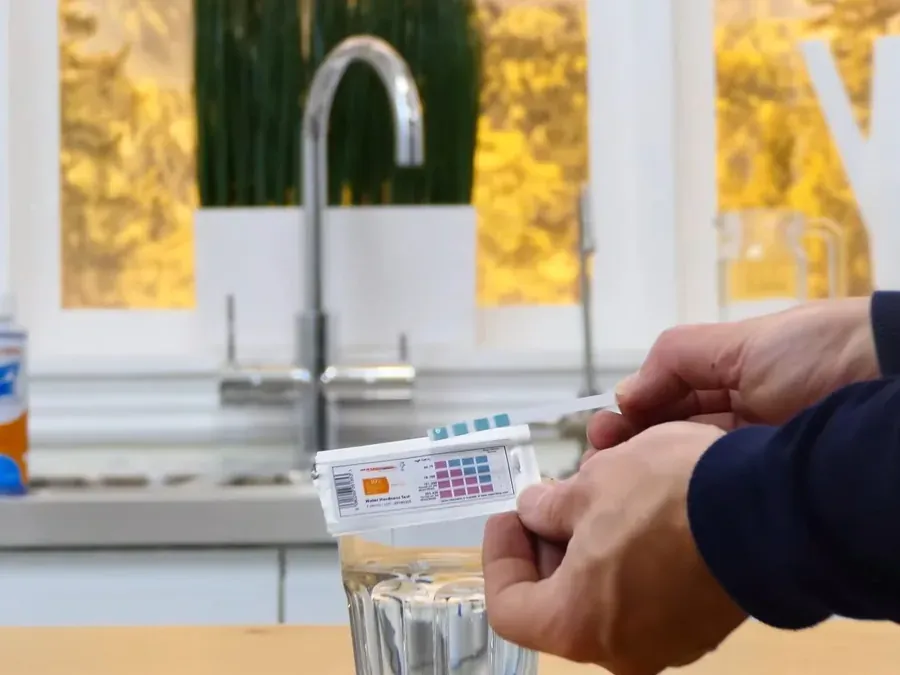
Test before you buy. Your tap can differ from a utility's published report, because water picks up minerals and metals on its way through the pipes. A plumber can run a hardness test strip on site, and a lab test gives more detail if taste or odor is the concern.
Whole-house filtration
A filter on the main line treats all the water in the house. Sediment filters catch grit. Carbon filters reduce chlorine taste and odor. Which type fits depends on what the test shows.
Water softener and filtration questions answered
What does a water softener cost to install and run?
Do now: have the water tested, because the result shapes the size and type of system. The two local utilities named on this site leave hardness out of their latest reports, so a test of your own tap is the way to know.
Can wait: choosing a brand. No figures appear on this site, because the water and the scope decide the price. Request the scope in writing, naming the unit, the installation and the supplies it uses, such as salt.
How do I get something out of the brine well of my water softener?
A sharp item in the brine well is a reason to be careful. Put the softener in bypass or stop its cycle, and do not reach in by hand if a blade is exposed. A magnetic pickup tool lifts a steel blade without touching it.
If the item may have dropped into the resin tank or the valve, stop and call a plumber instead of dismantling the unit.
What is the difference between a softener and a water conditioner?
Two options. A salt-based softener removes the hardness minerals from the water by exchanging them, and it uses salt and a regeneration cycle. A conditioner, which works without salt, changes how the minerals behave so they scale less, but it does not remove them.
Pick a softener if you want hardness actually removed. Pick a conditioner if you want less scale and no salt or brine drain line.
Do I need a softener, a filter or both?
They do different jobs. A softener deals with hardness. A filter deals with things like sediment, chlorine taste or smell, depending on the type. Many homes need only one, and some use both.
Start with what you notice: scale on fixtures points to hardness, while taste or odor points to filtration. A water test tells you which.