
Pipes leaking or failing in Florence? Repair a section or repipe the house
Broken pipes and leaks in the pipework are emergencies when water is moving. A burst pipe is an emergency. A pinhole leak or a pipe that keeps failing is a decision. Call (520) 340-7175, describe what you see and dispatch sends a plumber to examine the pipe and explain the options.
Pipe work is carried out by licensed and insured plumbers, who show you the damaged section and the condition of the pipe around it before recommending anything.
- Licensed and insured plumbers
- Same-day service when available
- 24/7 emergency dispatch
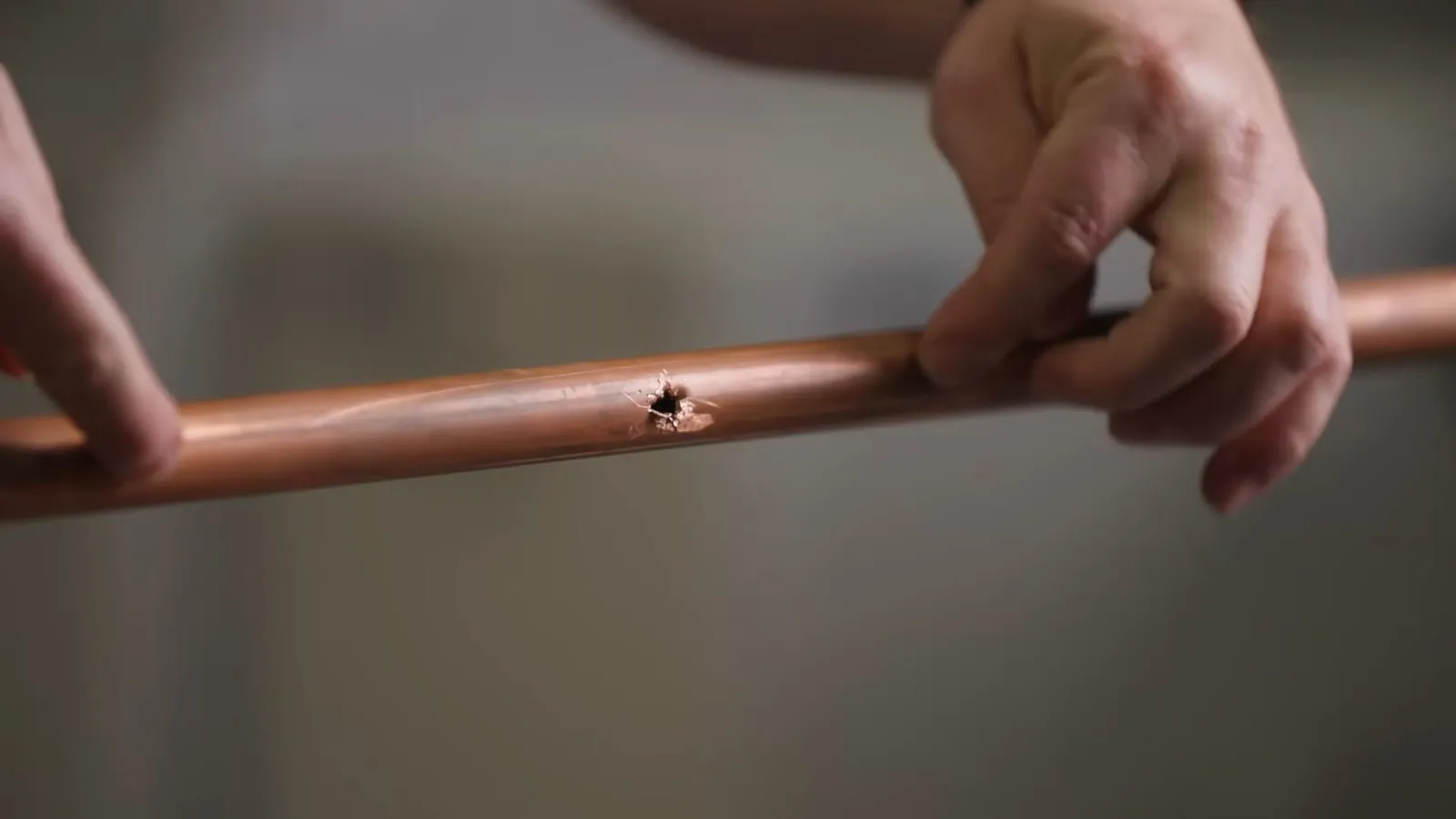
Burst pipe: the first minutes
- Close the main shutoff valve at the house.
- Switch off the water heater so it does not run dry.
- Open a faucet at the lowest point in the house to drain the lines.
- Cut power at the panel only if you can reach it without stepping in water.
- Move belongings and photograph the water before cleanup.
- Call, and describe where the water is coming from.
Pinhole leaks, and when pipe repair stops making sense
A pinhole leak is a tiny hole, often in copper, that sprays a fine jet or just weeps. It is rarely the only weak spot, and premature wear on fittings and valves in the same run often follows. An honest repair versus repipe answer comes from looking at all of it.
| Situation | Repair | Replace more pipe |
|---|---|---|
| One leak, pipe otherwise sound | Cut out and replace the section | Not needed |
| Second or third leak in a year | Possible, but expect more | Worth pricing a longer run |
| Pipe thin or pitted along its length | Short-lived | Usually the better path |
| Water discolored at the tap | Does not cure the cause | Ask about the full line |
A leak that is hard to find first needs leak testing and repair before anyone cuts a wall.
Pipe materials and how each one fails
This table describes the materials in general. It does not claim which one is in Florence homes, because no local source says. The plumber identifies what you have.
| Material | Typical failure |
|---|---|
| Copper | Pinholes from corrosion, worn joints |
| Galvanized steel | Rust inside the pipe, low pressure, orange water |
| PEX | Fitting failures or damage from sun or impact |
| CPVC and PVC | Cracking at joints, brittleness with age |
| Polybutylene | A gray plastic pipe known for failing at fittings |
| Cast iron (drains) | Rust and scale inside, cracks and leaks at joints |
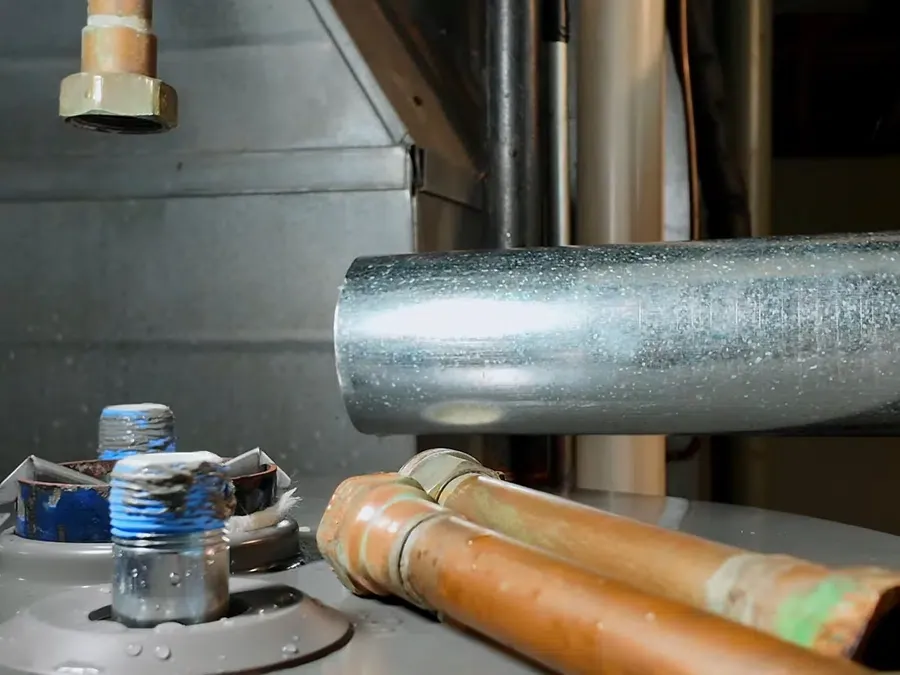
Copper pipe repair
Copper can be soldered or joined with push-fit fittings. A plumber cuts out the damaged piece, cleans the ends and fits a new section. If the pipe is corroded along its length, the repair is a replacement of that run.
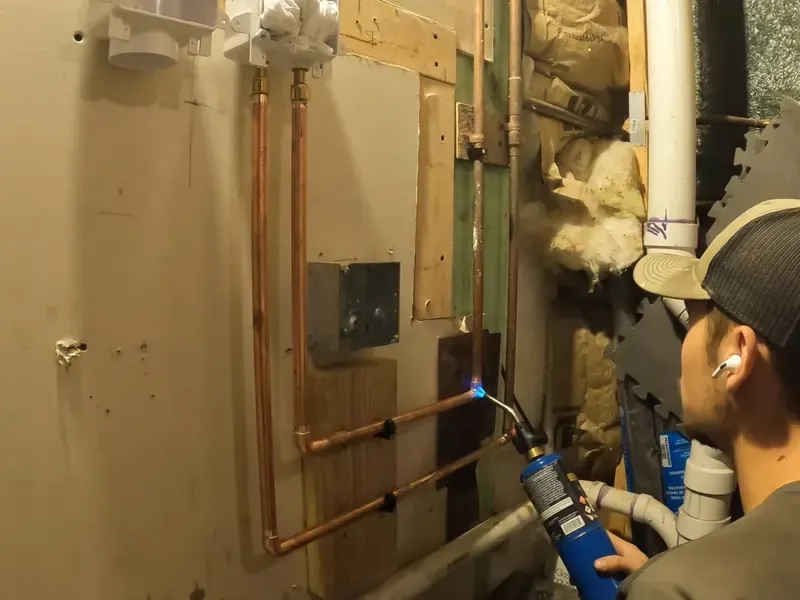
Whole-house repiping: what it involves
- The plumber walks the house and finds the pipe runs, valves and fixtures.
- A written scope names what is replaced and what is left in place.
- Water is shut off and the old lines are removed or abandoned.
- New pipe is run, usually through walls, attic or crawlspace.
- Each line is pressure tested before walls are closed.
- Drywall access holes are patched, which may need a separate trade.
Plan for the house to be without water for part of each work day. Ask in advance how long that will be and whether the plumber handles the permit.
Galvanized pipe is a common reason for repiping in older homes because it rusts inside and chokes flow. Whether yours is galvanized is something the plumber confirms by looking, not by the age of the house.
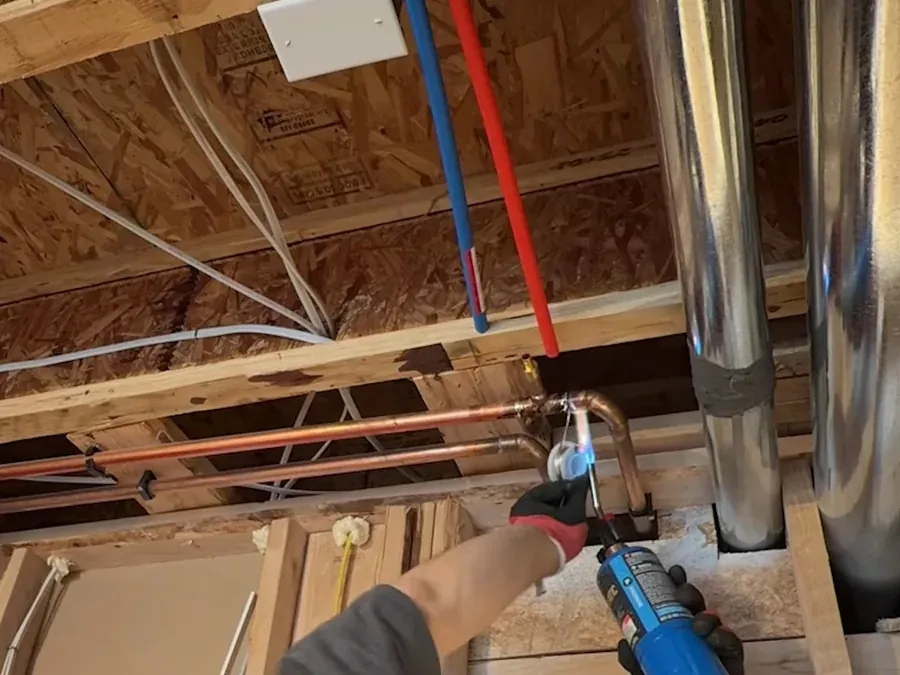
Under-slab and underground lines
Pipes beneath a concrete floor or in the yard are harder to reach. A leak there may call for rerouting the line through walls instead of breaking concrete. The slab leak help page explains the options. A leak in the yard line is covered under water line replacement.
Replacing a single pipe run
A section that has failed, a line that was damaged by a past repair or one run that is out of code may be replaced on its own. It is the middle ground between a patch and a repipe.
Repiping and pipe repair questions answered
Should I repipe my house or keep repairing the pipes?
Two options. Repair fits when the damage is limited to one run and the rest of the pipe is sound. Repipe fits when leaks keep appearing in different places, when water is discolored or when the pipe material is known to fail.
Ask the plumber to show where the pipe is failing and how much of the system looks similar. One repair after a long quiet stretch is different from the third repair in a year.
Can a leaking copper pipe be repaired, or does it need replacing?
A single pinhole or a damaged joint can often be repaired by cutting out the bad section and joining new copper. When the pipe is thin or pitted along its length, new leaks tend to follow, and replacing a longer run makes more sense.
A plumber can see which one applies once the pipe is exposed.
What is the difference between PVC and cast iron pipe?
Plumbing permits in Florence are issued by the Town's Building Safety office, so ask what applies to your job before choosing a material. Between the two, PVC is plastic, light and resists corrosion. Cast iron is heavy, quiet and strong, but it can corrode and flake internally over the years.
Drain and waste lines use both. Which one suits a repair depends on what is already in the house and what the code allows.
How do I tell whether I have a pinhole leak, and what should I do?
Check these in order:
1. Look for damp spots, green or white crust on copper, or a stain on a wall or ceiling. 2. Run the meter check with every fixture off. 3. Note where water pressure drops. 4. Take photos and write down when you first noticed it.
Then call. A pinhole can look small and still let water through for weeks.
A pipe burst. What should I do first?
Imagine water spraying from a wall at night. Close the main valve at the house, turn off the water heater, open a faucet low in the house to drain the lines and keep clear of anything electrical that is wet.
Then call dispatch. Move what you can away from the water and photograph the area before cleanup.