Tankless water heater: switching, servicing and fixing an on-demand unit
An on-demand heater gives hot water as you use it, with no tank to fill. It also has its own installation needs and its own maintenance. Call (520) 340-7175 to talk with dispatch about a swap, a repair or a unit that is not heating.
Installation and service come from licensed and insured plumbers, who check gas, venting and power before anything is ordered.
- Licensed and insured plumbers
- Same-day service when available
- 24/7 emergency dispatch
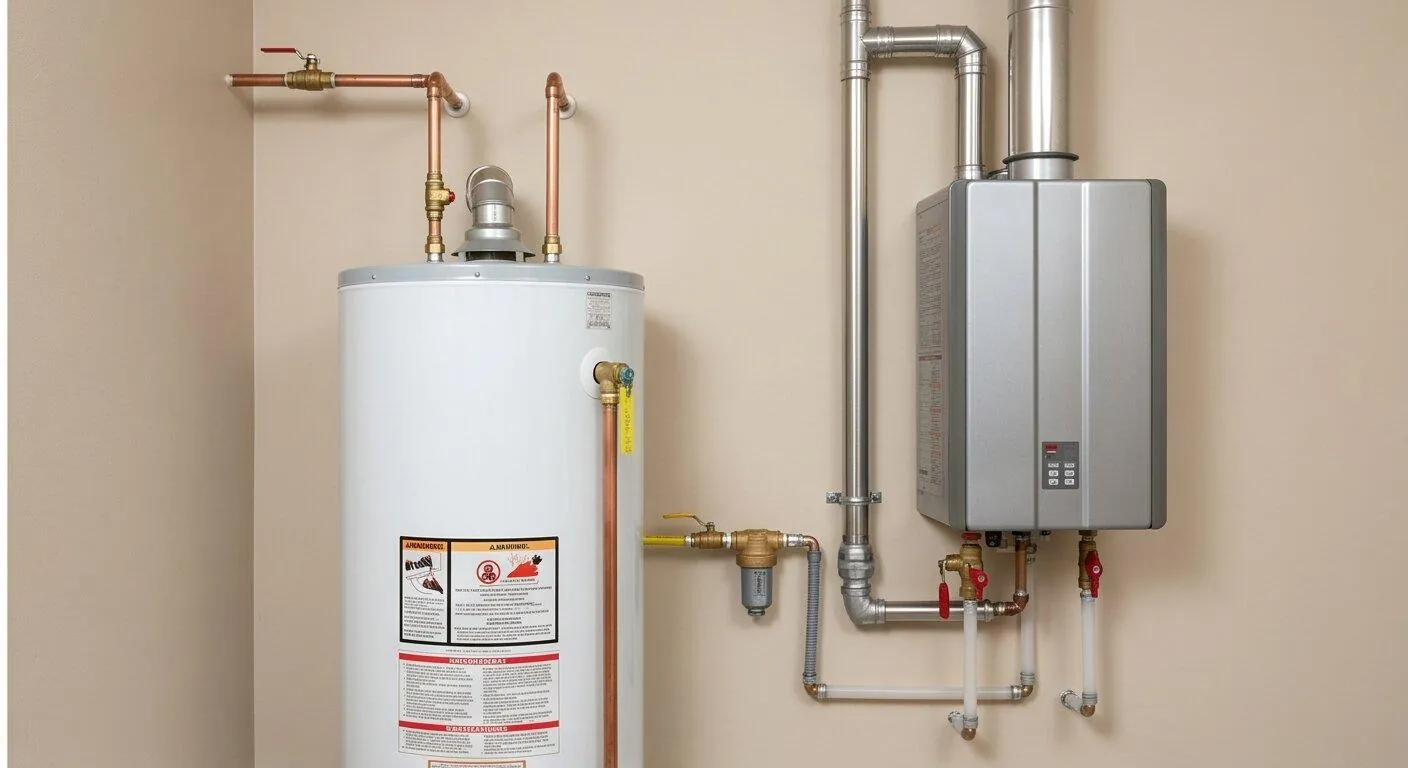
Is tankless the right swap for your home
| Tank heater | Tankless heater | |
|---|---|---|
| How it works | Heats and stores water | Heats water as it flows |
| Space | Floor space for the tank | Wall mount, smaller footprint |
| Hot water supply | Limited to the tank volume | Steady, as long as demand stays within capacity |
| Install needs | Standard connections | Larger gas line or heavy electrical, venting |
| Maintenance | Periodic flush | Descaling on a regular schedule |
Dispatch treats an urgent or same-day request like any other call. If your tank has failed and you want to move to tankless, say so on the call, and the plumber can talk through whether a temporary fix or a full swap fits.
Because a tankless unit makes hot water only when a tap opens, the wait at a far fixture does not shrink. Some homes add a recirculation pump or a small point-of-use tank near a distant bathroom to cut that wait.
Converting from a tank is common. The old tank comes out, the gas or electrical service is checked and the new unit is mounted on the wall. Whether that is simple depends on line size and where the vent can go.
Tankless installation: what changes from a tank
- The plumber measures demand: how many fixtures run hot water at once.
- Gas line size or electrical capacity is checked against the unit's needs.
- A vent route is chosen, or a power circuit is planned for an electric unit.
- The old heater is removed and the new unit is mounted and connected.
- Isolation valves are fitted, so the unit can be flushed later.
- The unit is started and tested at several fixtures.
Ask Florence's Building Safety office about permits before the work begins.
Descaling and flushing a tankless heater
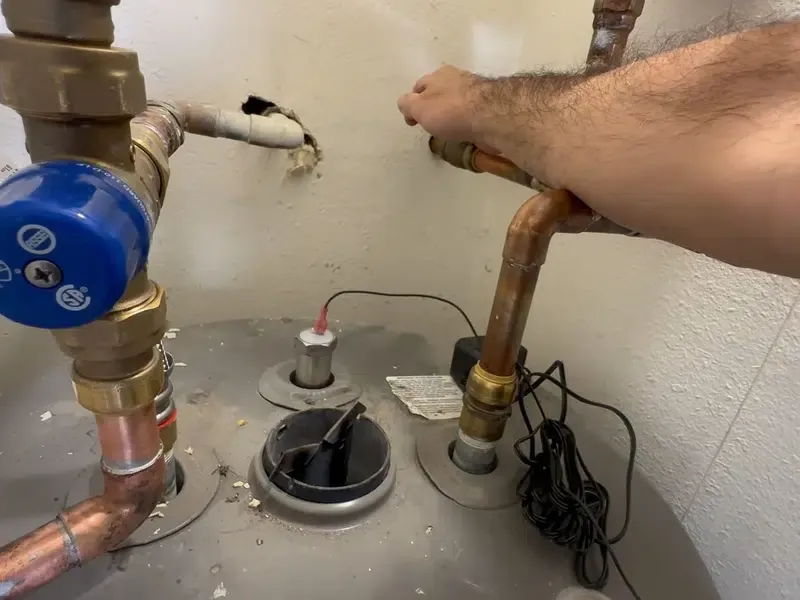
Minerals in water can coat the inside of the heat exchanger and cut flow and efficiency. Flushing the unit with a descaling solution clears them. A water softener (see the softener and filter work page) cuts scale at the source. The isolation valves installed with the heater make this a short job.
When scale builds up you may notice a longer wait for hot water, a smaller flow, a unit that cycles on and off or an error code tied to the heat exchanger. Caught early, a descale is a short job. Left alone, the scale hardens and parts wear faster.
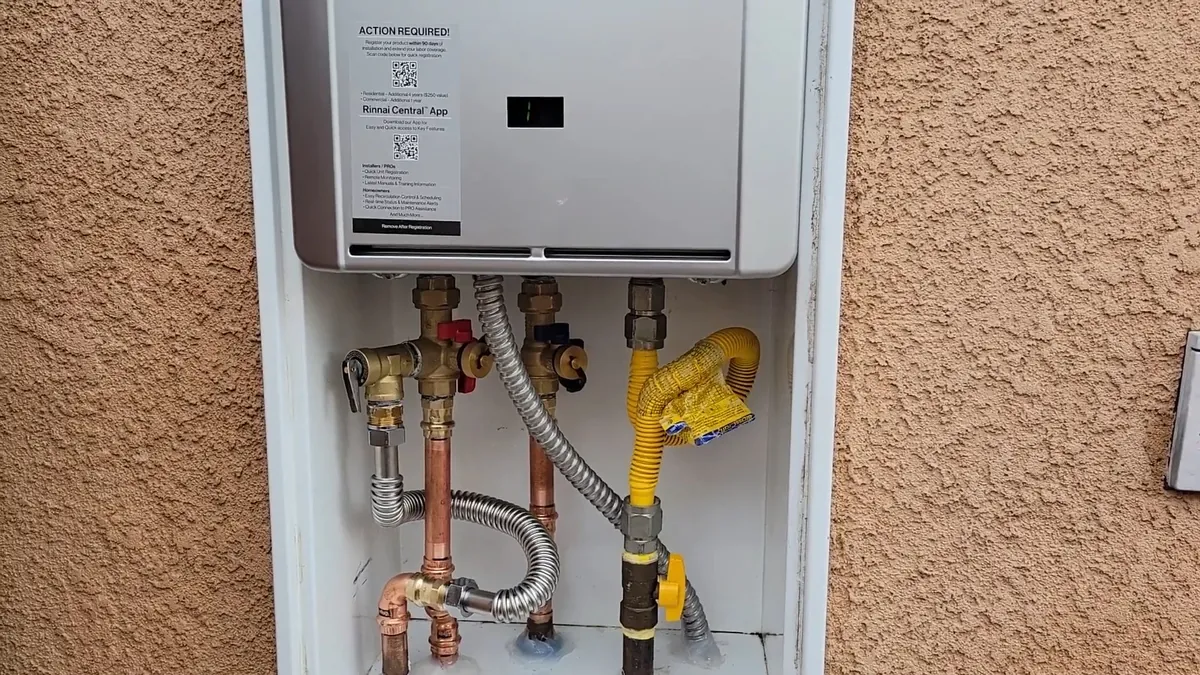
Tankless repair and troubleshooting
| What you see | Common cause | What the plumber checks |
|---|---|---|
| Error code on the display | Ignition, flame, exhaust or flow fault | The code, burner and vent path |
| Water runs lukewarm | Scale buildup or low flow | Heat exchanger and inlet filter |
| Hot water cuts out in short bursts | Flow below the unit's minimum | Fixture flow and the flow sensor |
| No power to the unit | Breaker, wiring or control board | Supply and the board |
For a tank-style unit instead, the heater repair service page applies. A unit that shuts off for gas safety should be treated seriously. If you smell gas, get outside and report it to the gas utility or 911 from there.
Gas or electric, and which brand
Gas units vent exhaust and need a gas line sized for their peak demand. Electric units need no venting but draw heavy current. Which suits a house depends on what it already has.
Brand matters for parts and venting. Ask the plumber which makers they install and service, and ask whether the model needs a specific vent type. Also ask about the warranty on the heat exchanger and parts, and what the maker requires to keep it valid, such as yearly descaling. Keep the model and serial numbers somewhere easy to find, since a service visit starts with them. The new water heater installation page covers standard tanks, and the gas line page covers upsizing a gas line.
Tankless water heater questions answered
Tankless versus a tank water heater: how do I decide?
Work through this checklist:
1. How much floor space is the tank taking? 2. Does the gas line or electrical service have room for a tankless unit's higher demand? 3. How many fixtures run hot water at the same time? 4. Is the venting path easy to route? 5. Is the household likely to grow or change?
If the answers favor space and steady hot water, tankless is worth pricing. If the swap should be simple and the setup stays the same, a tank often fits.
Should I choose a gas or an electric tankless heater?
Picture a house with a gas line already at the water heater and a full electrical panel. Gas usually delivers more hot water per minute, but it needs venting and may need a larger gas line. Electric units skip the venting but draw a lot of power, and some homes need a service upgrade.
Before recommending one, the plumber checks the gas meter, the line size and the panel.
Can I convert from a tank to a tankless unit?
Do now: confirm the gas line size or electrical capacity and look at where a vent can run. Those are the limits that decide whether conversion is simple.
Can wait: the unit model and finishing details. Once the connections are known, the swap is planned around them. The old tank is removed and the plumbing is adjusted to fit the new unit.
Does tankless installation cost more than a tank?
It often does, because the connections are larger and the venting is more involved. This site gives no figures, since the scope drives the price: line size, venting route, electrical work and permit all count.
Ask for a written scope that names each of those. What shapes a plumbing quote is explained on the cost page.