
Water line leaks, low pressure and no water: repair or replace the line
The pipe that brings water from the street to your house works unseen until it fails. A wet strip in the yard, a meter that spins or no water at all point to it. (520) 340-7175 gets you dispatch, and a plumber can go out to find the break.
A line failure is investigated by licensed and insured plumbers, who locate the problem first, then explain whether a repair or a new line makes sense.
- Licensed and insured plumbers
- Same-day service when available
- 24/7 emergency dispatch
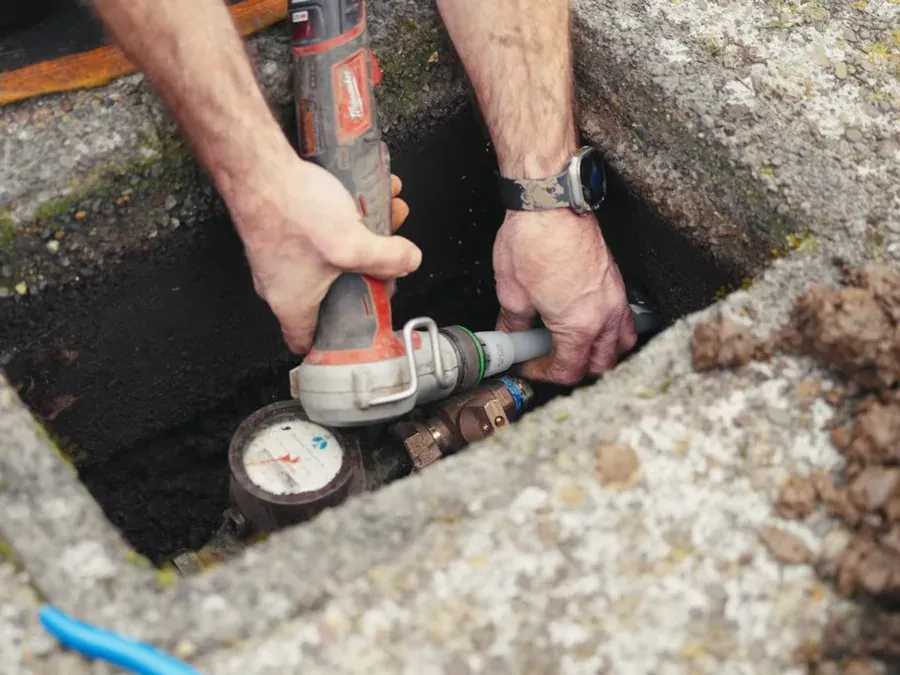
No water or weak pressure: where to look
A quick check tells you which side of the meter the problem is on.
- Look at the meter with every tap closed. Movement means water is escaping somewhere.
- Close your main valve and look again. If the meter stops, the leak is inside; if it keeps moving, it is on the yard line.
- Ask a neighbor whether their water is also off before calling the utility.
| What you see | Check first | Who handles it |
|---|---|---|
| No water anywhere | Whether neighbors are also out | The utility, if the street is affected |
| Meter turns with all taps off | A leak on the line or in the house | A plumber, after the meter check |
| Wet strip or soft ground in the yard | Where the line runs from meter to house | A plumber; call 811 before digging |
| Low pressure at every fixture | Main valve, regulator and aerators | A plumber |
| Pressure so high pipes bang | A gauge reading at a hose bib | A plumber, for the regulator |
The service line: yard line from meter to house
The service line is the buried pipe between the water meter and the house. Whether the utility or the homeowner is responsible for each part depends on the utility, so ask which segment is yours.
Florence's Town utility asks customers to report what their service line is made of, as part of the federal Lead and Copper Rule. That is a useful prompt to find out: a plumber can usually see the material where the line enters the house. If the pipe inside the house is also failing, repiping and pipe repair is worth comparing.
Water line repair
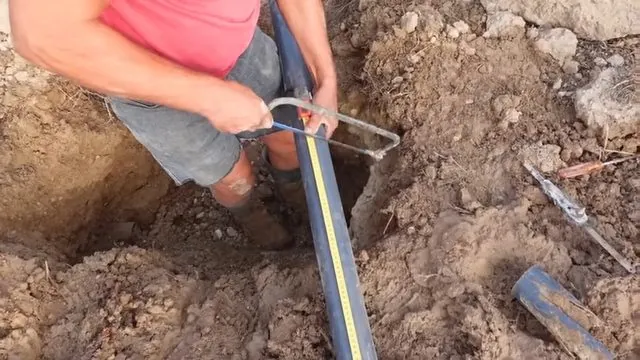
Buried-line leaks often need only a short section opened. The plumber finds the spot, digs to it, cuts out the damaged piece and joins new pipe with proper fittings, then backfills.
A home sale is a good reason to test the line first, because a buyer's inspection can flag a leak. Ask the plumber to put the repair in writing so you can hand it on.
Afterward the plumber restores the water, runs fixtures to clear air and grit from the line, and checks the meter again to confirm it is not moving with every tap closed.
If the break flooded a room, drying and restoration work handles the drying.
- Testing under pressure shows the line is tight before the trench is closed
- A shutoff valve may be added so the line can be isolated in future
- High pressure hydro jetting is a drain method, not a water line repair. The meter and the line ahead of it belong to the utility, so call them about those
- Photos of the break help if the cause was a third party
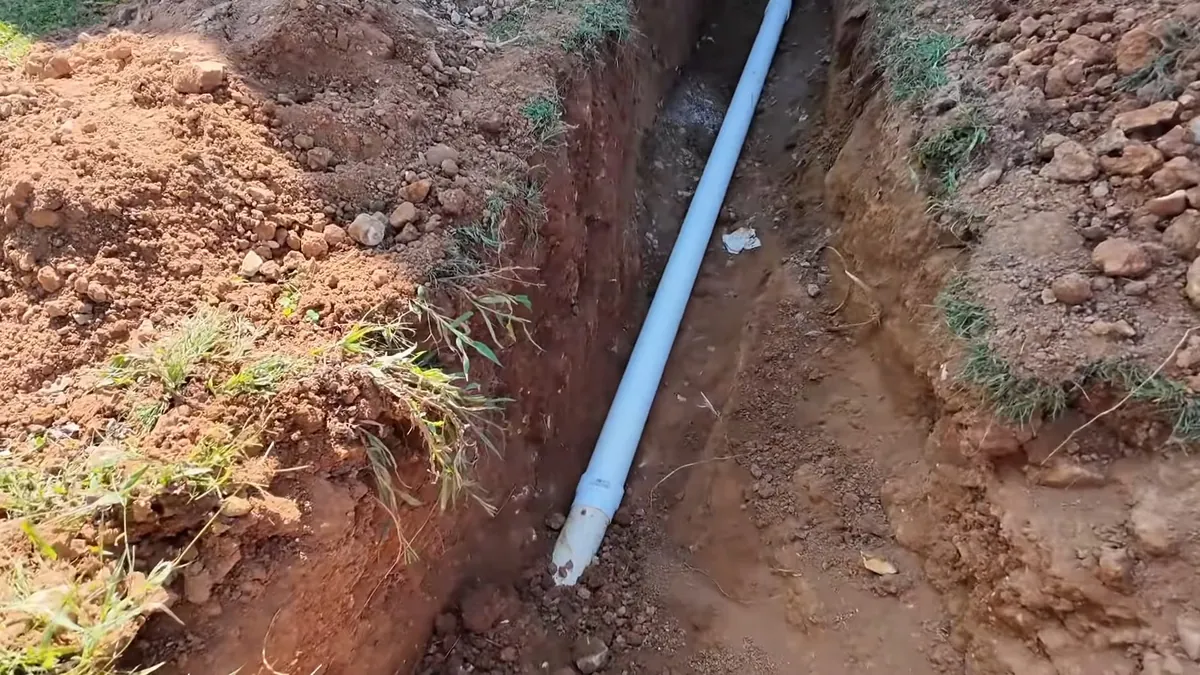
Water line replacement
A new line is worth considering when the line is old, leaks repeatedly or has failed along a long stretch. The new line follows the old route or a better one.
| Method | How it works | Fits when |
|---|---|---|
| Open trench | The old line is dug up and replaced | Access is easy and the route is clear |
| Pull-through | New pipe is drawn along the old path | The ground and route allow it |
Ask what happens to the yard afterward: backfill, compaction and surface restoration. Landscaping and paving are often separate trades, so settle who covers them before digging starts.
Ask whether a permit is needed. Building Safety at the Town of Florence is the office to ask. Arizona requires a licensed contractor when a job exceeds one thousand dollars or needs a permit.
Pressure: regulator, high and low readings
- A pressure regulator brings street pressure down to a level house plumbing can take
- High pressure shows up as banging pipes, running toilets and short-lived fixtures
- Low pressure at one fixture is usually a clogged aerator or valve; at all fixtures it points to the line, a regulator or a partly closed valve
- Pressure testing of the lines before and after work shows whether a repair held
A leak that causes pressure loss inside the house is found with locating the leak.
Main shutoff and meter valves
Locate the main shutoff valve in advance. Look near where the supply pipe enters the house. A valve that is stuck or leaking at the stem should be replaced before an emergency tests it. The valve at the meter belongs to the utility, so ask before you touch it.
Water line questions answered
What should I do about a bad pressure regulator?
Do now: if pressure is very high and fixtures are spitting or banging, close the main valve and call. A failing regulator can strain pipes and fixtures.
Can wait: picking the replacement regulator model. A plumber tests the pressure with a gauge first, then replaces the regulator if the reading is outside the safe range.
My water pressure is too high. Is that a problem?
Yes, it can be. You may hear banging pipes, see faucets that drip after repair or find a water heater relief valve that discharges. High pressure strains pipe, fittings and appliances over time.
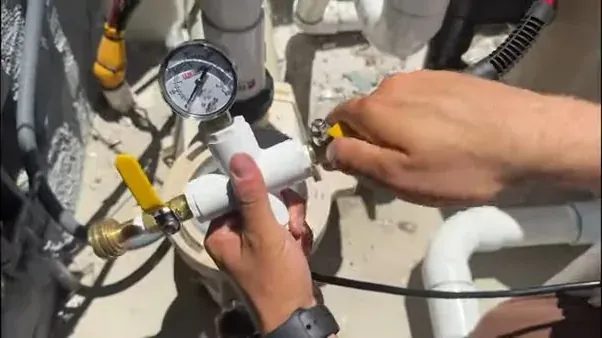
A gauge on an outdoor hose bib shows the reading. A pressure regulator, if one is installed, may need adjusting or replacing.
I have no water at the house. Is it my line or the utility?
Two options. First, check the meter: if neighbors have water and your meter turns when a tap is open, the problem may be inside your property. If neighbors are dry too, call the utility serving your address.
If the meter shows no flow with a tap open and the main valve is open, the break may be on your side of the meter or the valve may be shut. Dispatch can help sort it out.
What does water main replacement involve?
The old line is exposed or bypassed, and a new pipe is installed along the route. It can be dug in an open trench or, where the ground and route allow, pulled through with less digging.
Arizona 811 has to hear about the dig two or more full working days in advance. Ask who calls and who applies for the permit.