
New water heater for your Florence home: choose it, size it, install it
A tank that leaks at the seam, a heater that will not keep up or a repair bill that keeps climbing usually ends in a replacement. Phone (520) 340-7175 and dispatch can arrange for a plumber to inspect the unit and walk through your choices.
Installations are done by licensed and insured plumbers, who remove the old tank, set the new one to code and test it before they leave.
- Licensed and insured plumbers
- Same-day service when available
- 24/7 emergency dispatch
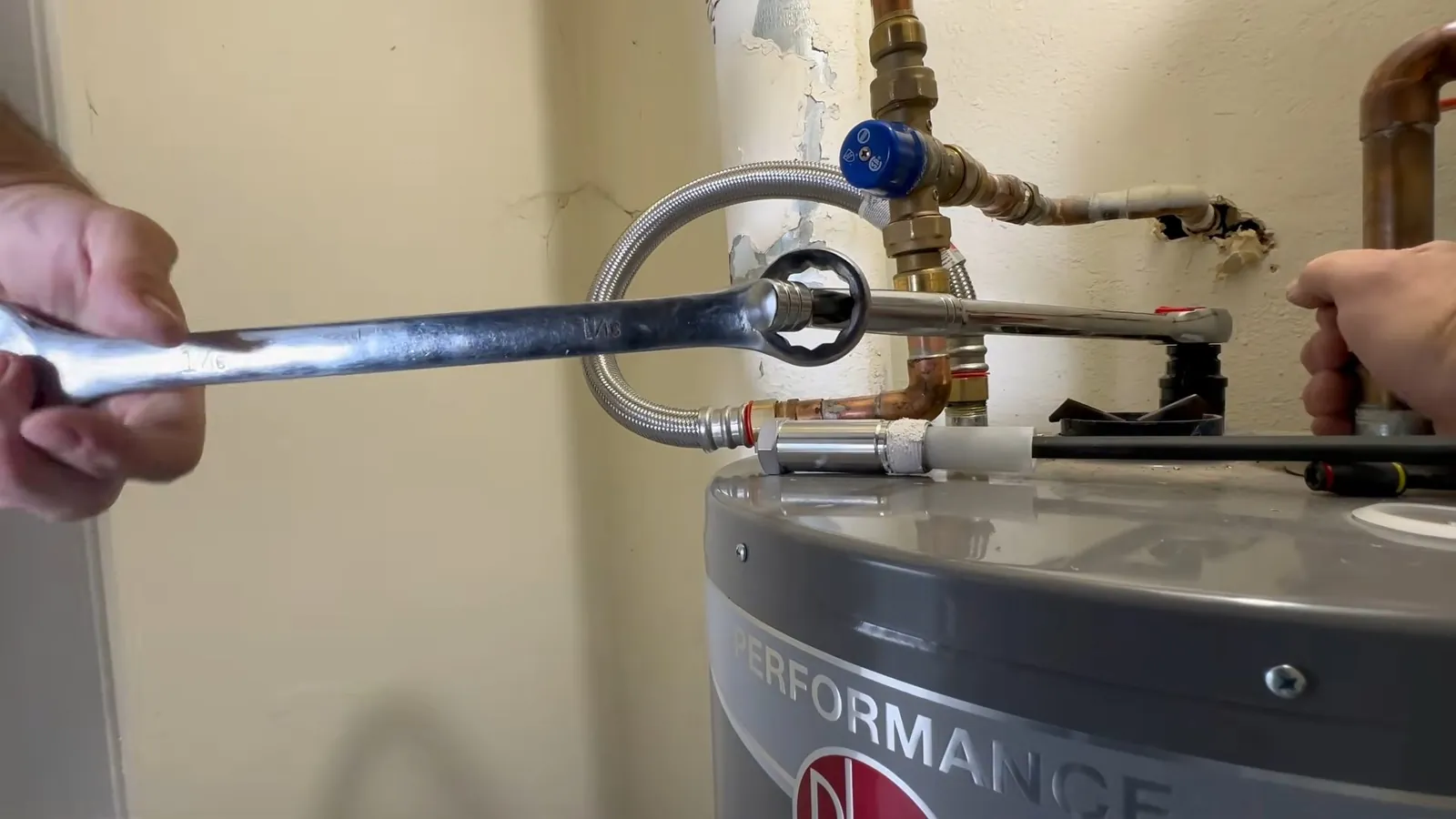
Replacement: signs the tank has reached the end
- Water pooling around the base, or a seam that weeps
- Rust-colored hot water or a metallic taste
- A tank well past ten years old
- Repeated repairs within a short period
- Rumbling that returns right after a flush
A leaking tank body cannot be patched. A part, such as a valve or an element, can be replaced, and the water heater troubleshooting page covers those cases.
Gas, electric, hybrid or heat pump: what fits
| Type | How it heats | What it needs | Worth knowing |
|---|---|---|---|
| Gas tank | Burner under the tank | Gas line and a flue to vent exhaust | Recovers hot water quickly |
| Electric tank | Two heating elements | A dedicated circuit of the right size | No flue, simple venting |
| Hybrid or heat pump | Pulls heat from the surrounding air | Power, airflow and a condensate drain | Needs clear space around the unit |
| Point-of-use mini tank | Small electric unit at one fixture | An outlet and a water line nearby | Suits one sink, not a whole house |
Tank versus tankless is a separate decision. The tankless water heater help page covers it.
Sizing: how many gallons
Size depends on how many people use hot water and how many fixtures run at once. A tank that is too small runs out mid-shower. One that is too large heats water you do not use.
- Count the people and the bathrooms
- Note any large soaking tub or two showers that run together
- Read the capacity printed on the old tank
- Tell the plumber about a planned remodel or a growing household
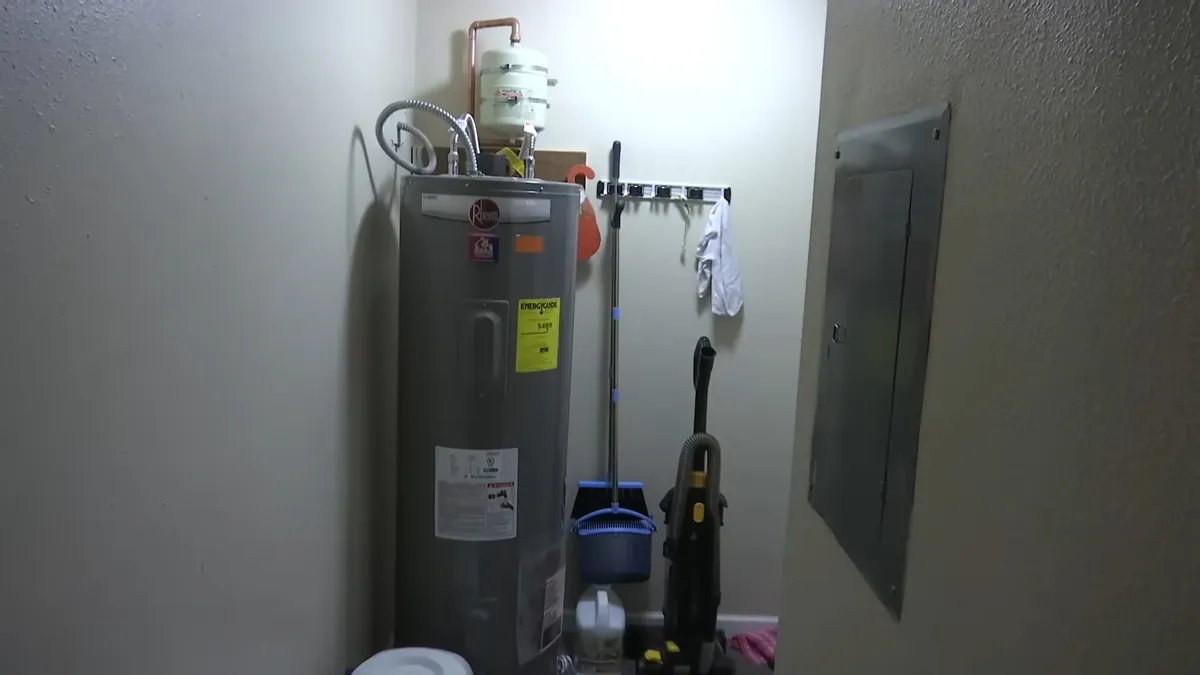
Installation day, step by step
- The plumber shuts off the water and the power or gas, then drains the old tank.
- The old unit is disconnected and removed.
- The new heater is set in place, with a drain pan where the location needs one.
- Water, gas or electric and venting connections are made and checked for leaks.
- The relief valve and its discharge line are installed.
- The heater is filled, powered up and tested for temperature.
A visit often takes part of a day. Plan for the house to be without hot water during that time.
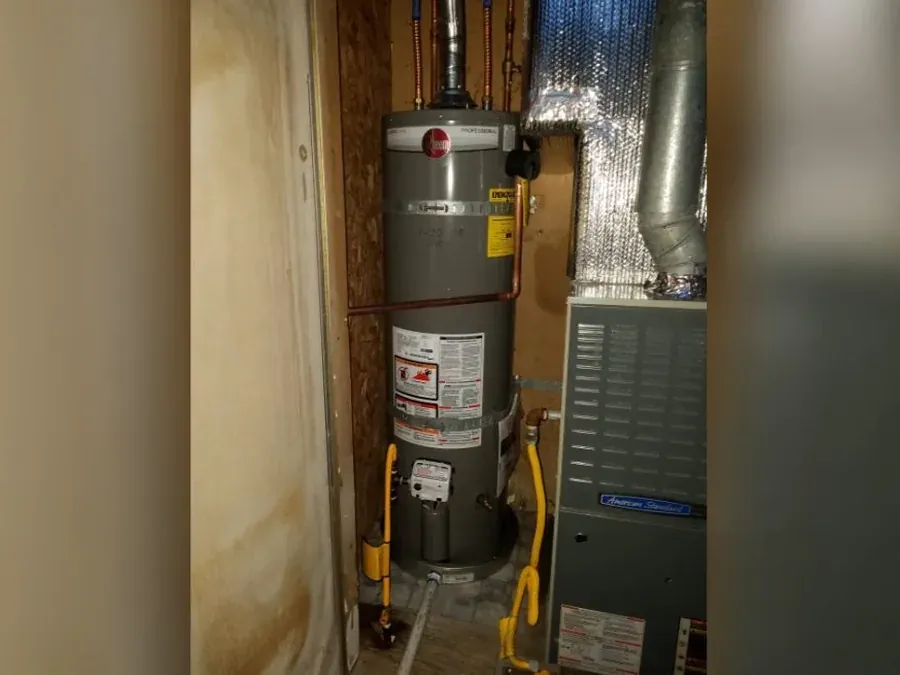
Expansion tank, permit and code
Many installations add a thermal expansion tank. It absorbs the pressure that builds when water heats up in a closed system. Whether yours needs one depends on the plumbing setup, which the plumber checks on site.
- Ask whether the replacement needs a permit. In Florence, the Town's Building Safety office is the place to ask
- Gas units need correct venting and combustion air
- The relief valve must drain to a safe place
- A licensed contractor is required for work over one thousand dollars or any work that needs a permit
A permit also means an inspection after the work, which is a second set of eyes on the connections.
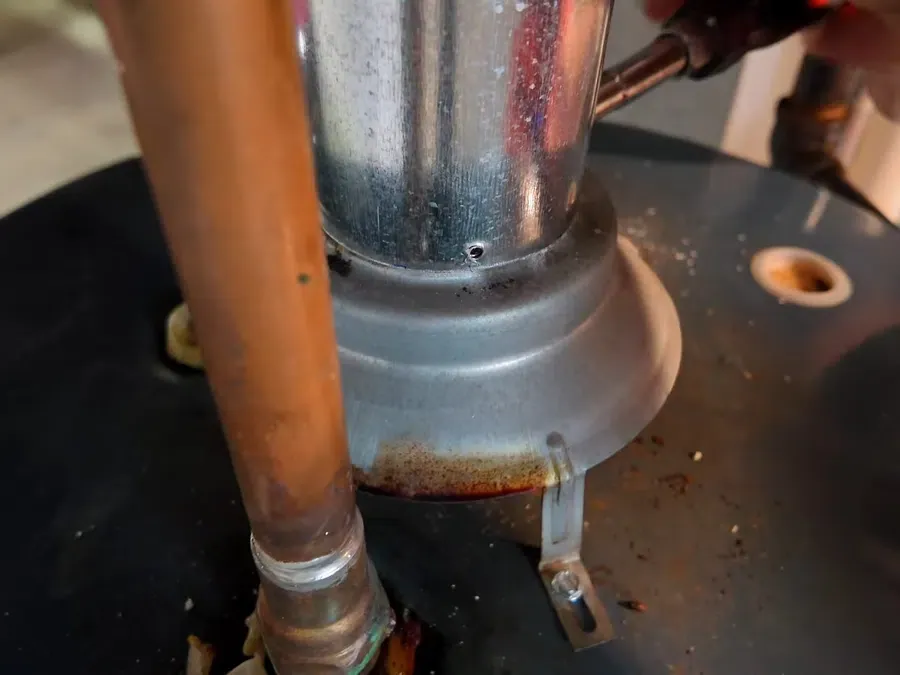
Choosing who installs it
- Ask for the license and check it at roc.az.gov
- Ask who applies for the permit, if one is needed
- Get the scope in writing, including removal of the old tank
- Ask what the manufacturer and the installer each cover
- Compare written scopes, not phone quotes
If the old heater caused water damage, structural drying covers the drying afterward.
Water heater replacement questions answered
A pipe burst under the house after my water heater was replaced. What do I do?
Do now: shut off the main water valve, switch off the heater's power or gas, and call dispatch. Keep people away from any wet floor and avoid electrical items near the water.
Can wait: deciding who pays and what to claim. Take photos, keep the invoice from the replacement and tell the original installer in writing. A plumber can inspect whether the burst is connected to the work or is a separate failure.
How do I choose an installer or company for a water heater?
Begin with what you can see: a burst fitting, a flooded closet or a heater that will not light is a reason to move quickly, and a reason to ask questions anyway. Ask whether the plumber is licensed and insured, who pulls any permit, what is included in the quote and whether the old tank is removed.
Arizona's contractor registrar lets you check a license at roc.az.gov. A written scope, not a phone price, is the thing to compare.
Tank or tankless: which is better for my home?
A tank is simpler and usually costs less to install. A tankless unit saves floor space and supplies hot water continuously, but it often needs a larger gas line or more electrical capacity.
Pick a tank if the swap should be quick and the layout stays the same. Pick tankless if space matters and the home can support the connections. The tankless page compares them in more detail.
Can two water heaters be replaced at the same time?
Yes. Replacing both in one visit saves a second trip and keeps the work under one permit if a permit applies. Each unit still needs its own sizing check, shutoff valve, relief line and venting or wiring.
If one is failing and the other is not, the second can wait, but a heater of the same age is likely close behind.
My water heater flooded the area. What happens with the replacement?
Ask the Town of Florence's Building Safety office whether the replacement needs a permit. Then stop the water, turn off the power or gas and call.
The plumber removes the failed tank, checks the floor and drain pan, and installs the new unit with a relief line. If water spread into walls or flooring, water damage restoration handles drying.